Artificial intelligence (AI) is reshaping how businesses think about infrastructure — forcing organizations to reassess traditional cloud-only strategies in favor of hybrid and on-premises deployments that provide more control, security, and performance for critical workloads. Gone are the days when moving everything to the public cloud was the default; now, IT leaders are selecting the right platform for each stage of the AI lifecycle.
From rapid experimentation to production-grade AI systems that handle sensitive data, understanding how cloud and on-premises AI environments compare influences performance, risk posture, and long-term cost. This article explores key trends shaping these infrastructure decisions — and why a hybrid future appears inevitable.
Cloud vs. On-Prem AI: A Strategic Crossroads
AI workflows are diverse: experimentation, model training, inference, and real-time processing each have different infrastructure demands. Public cloud platforms excel in flexibility and speed, while on-premises setups offer control and predictability.
Public Cloud Strengths
Public cloud environments remain indispensable for many organizations because they offer:
Elastic scalability — instantly scale CPUs/GPUs for dynamic workloads
Rapid provisioning — spin up and tear down environments for experimentation
Managed services and AI tools — access to APIs, frameworks, and pre-built models without deep infrastructure expertise
Reduced upfront investment — pay-as-you-go pricing lowers the barrier to entry
This makes public cloud ideal for initial model training, proof-of-concept work, and global collaboration.

Why On-Premises Is Making a Comeback
As AI initiatives move from experimentation into production, enterprises are discovering limitations in cloud-only strategies. Many are shifting workloads back in-house for reasons that go far beyond cost.
Enhanced Security and Data Control
For sensitive datasets and proprietary models, on-premises environments provide greater data sovereignty. Regulatory compliance — such as GDPR or industry-specific mandates — often requires keeping AI workloads on-site to minimize risk and ensure auditability.

Performance and Predictability
Dedicated on-prem hardware eliminates noisy neighbors and shared resource bottlenecks common in public cloud environments. This results in:
Ultra-low latency inference
Predictable performance for real-time AI applications
Faster model training with dedicated GPUs or specialized processors
Long-Term Cost Efficiency
Although on-premises infrastructure demands upfront CapEx, organizations with predictable, heavy AI workloads often benefit from stable long-term costs and removal of variable expenses like cloud egress fees or unexpected compute price spikes.
IP and Competitive Advantage
Holding proprietary datasets and models on-site mitigates competitive risk. Enterprises can fully control how AI systems interact with internal data and prevent external exposure.
Cost, Compliance, and Control: The Hybrid Frontier
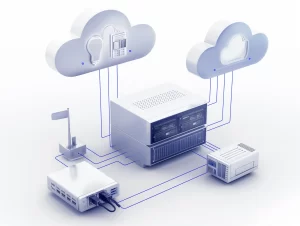
Rather than choosing one model exclusively, most enterprises are embracing hybrid AI strategies that combine the strengths of both cloud and on-prem environments.
- Cloud for experimentation and bursty workload
- On-premises for sensitive, latency-sensitive production worK
- Hybrid for seamless transitions and flexibility
This nuanced approach allows organizations to tailor deployments based on performance, cost, security, and compliance requirements — maximizing value without over-committing to a single platform.
Key Factors Driving the Shift Back In-House
Regulatory and Legal Pressures
Legal challenges around data usage and ownership are prompting organizations to rethink where AI workloads reside. In regulated industries, external infrastructure may expose data to unsanctioned jurisdictions or inadequate risk controls.
Cloud Cost Volatility
Cost predictability is a growing concern. AI workloads — especially those requiring persistent compute or massive GPU hours — can drive cloud bills unpredictably high. On-premises infrastructure helps stabilize budgets and simplifies forecasting.
Vendor Lock-in and Flexibility Loss
Once data gets deeply embedded in a specific cloud ecosystem, migration becomes difficult and costly, limiting future flexibility. On-premises or hybrid models help mitigate lock-in risk.
Conclusion: Choosing the Right AI Environment
AI infrastructure decisions are no longer binary. Today’s enterprises must evaluate performance requirements, compliance obligations, cost goals, and security risks when deciding where to run AI workloads. While public cloud offers unparalleled scale and agility, on-premises environments deliver control and predictability that are critical for production-grade, sensitive AI applications.
In practice, many organizations find the optimal balance through hybrid solutions, blending the strengths of both approaches — enabling rapid innovation in the cloud while keeping mission-critical workloads secure and under direct control.