The concept of private AI servers is becoming central to enterprises and tech teams that want full control over their data, secure handling of proprietary information, and highly contextual AI interaction. Unlike public AI services that process queries and data through shared, third-party infrastructure, private AI servers allow organizations to host models internally, offering enhanced security, customization, and data sovereignty from the first interaction.
In this article, we explore the fundamentals of private AI servers — from the core definition to how they operate, what makes them valuable, and what components are needed to build and manage them effectively.
What Is a Private AI Server?
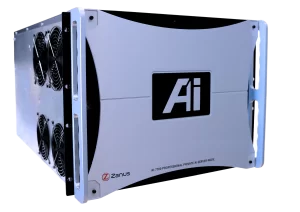
A private AI server is a dedicated system — physical or virtual — that stores organizational information and runs artificial intelligence models locally under the control of the organization. Instead of sending data to public cloud APIs or third-party providers, these servers respond to requests directly using private data sets and internal systems.
At its heart, a private AI server includes two key elements:
Custom Context Access: The ability to use internal documents, records, and proprietary knowledge to power AI responses.
Secure Model Hosting: Local or controlled inference engines that run AI models without external exposure.
This setup allows organizations to integrate AI deeply into their workflow while minimizing privacy and compliance risks.
Why Context Is Important — and How Private Servers Deliver It
When you ask an AI a question, the quality of the answer depends heavily on the context provided. For many public AI systems, only the prompt itself and general training data are used to generate responses — meaning answers can be generic or lacking in business-specific detail.
With private AI servers, context isn’t limited to what’s manually included in a prompt. Organizations can:
Integrate entire document libraries
Search and retrieve relevant snippets automatically
Embed internal policies, terminology, case histories, or technical data
This depth enables far more accurate, useful, and locally relevant responses than AI systems that rely solely on publicly trained models.
The Privacy Imperative: Why It Matters

One of the biggest attractions of building private AI servers is data privacy. Many companies deal with sensitive or regulated data that they cannot risk exposing to external providers — including customer information, strategic documents, research data, or anything subject to privacy laws like GDPR.
Public AI platforms sometimes offer privacy guarantees, but they typically still rely on shared infrastructure that may process multiple tenants’ workloads together. With private AI servers:
All data stays within your infrastructure
No third party processes or “sees” your queries
You retain control over access, encryption, and data retention policies
This level of control is especially vital for regulated sectors such as finance, healthcare, defense, and legal services.
Key Benefits of Private AI Servers
Here’s why many organizations are investing in private AI server infrastructures:
1. Enhanced Security
You control all access and encryption settings — reducing exposure to hacking or data leakage.
2. Regulatory Compliance
Maintaining context within strict jurisdictional boundaries helps compliance with privacy laws like GDPR, CCPA, and other regional standards.
3. Customization and Internal Integration
Private AI servers can be tuned to business needs, integrated seamlessly with existing systems, and tailored to domain-specific requirements.
4. Performance and Uptime Control
Local processing means reduced latency and no reliance on public service availability or network outages.
How Do Private AI Servers Work?
To deliver accurate responses using private data, these servers typically rely on one or both of the following mechanisms:
RAG — Retrieval-Augmented Generation
RAG systems enhance AI responses by searching a connected document store for relevant information and including it in the prompt before inference. This allows the model to leverage organizational knowledge automatically.
Example Use-Case:
A customer support AI might search a database of prior tickets to find similar cases, then use those snippets to generate a new response tailored to a current query.
Context Insertion
This method lets you embed whole documents or datasets directly into a chat context. It’s especially useful for documents with structured frameworks, manuals, or internal knowledge bases.
However, every model has a context window limit — the maximum amount of text it can ingest at once. So context insertion is often used selectively, depending on the task and model constraints.
Essential Components of a Private AI Server
Successfully building and running private AI server infrastructure requires multiple integrated pieces — here’s what they typically include:
Hardware
You need machines with significant memory and processing units capable of handling large AI models. Servers with high RAM and GPU capabilities are recommended — especially if you plan to host large language models or high-traffic services.
Frontend Interface
This is the user-facing component that manages requests and interactions with the backend systems. It could be a web app, API gateway, chatbot interface, or internal tool that interprets user requests and sends them to the server.
Inference Engine
At its core, the inference server runs the AI models. It takes inputs (prompts and context) and produces text outputs, classifications, insights, or predictions.
Popular models can range from open-source variants to internally trained engines adapted for specific business needs.
Embedding Models
These models turn documents into mathematical vectors so that similarity searches can find the most relevant context during retrieval. High-quality embeddings often have a bigger impact on relevance than raw model size.
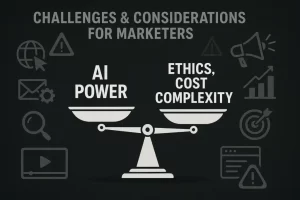
Challenges and Considerations
While private AI servers offer many benefits, they also come with notable challenges:
Cost and Resource Requirements
Building and maintaining private infrastructure — hardware, licensing, and specialized personnel — can be expensive.
Talent and Technical Complexity
These systems often require skilled engineers and AI specialists, which can be hard to recruit.
Lagging Behind Public Model Innovation
Public AI providers continually update and improve their models. Private systems might fall behind unless actively maintained.
Conclusion
Understanding private AI servers is critical for any organization considering deeper integration of AI into business workflows, especially when privacy, customization, and compliance are priorities. By controlling models and contextual data on in-house servers, teams can craft tailored solutions that leverage internal knowledge without exposing sensitive information. As AI regulations grow and technology evolves, private AI servers are positioned to become even more strategic.